


Home Elevator Not Working? A Southwest Florida Homeowner’s Guide to What to Check First (and When to Call for Service)
If you’ve walked up to your home elevator this morning and the doors won’t close, the car won’t move, or the whole system is unresponsive — take a breath. You’re not alone, and in many cases, the issue isn’t as serious as it feels.
At Modern Lifts, we service residential elevators across Southwest Florida every day, from Cape Coral and Fort Myers down through Estero, Bonita Springs, Naples, and Marco Island. And after countless service calls, we can tell you this: roughly half the “my elevator is broken” calls we respond to end up being something the homeowner could have resolved in two minutes — if they knew what to check.
This guide walks you through the most common home elevator problems, what you can safely try yourself, and — just as importantly — when you need to stop and call a licensed professional. We’ve also included a section on issues specific to Southwest Florida homes, because humidity, salt air, and hurricane season create challenges that generic troubleshooting guides don’t address.
First, a Safety Note
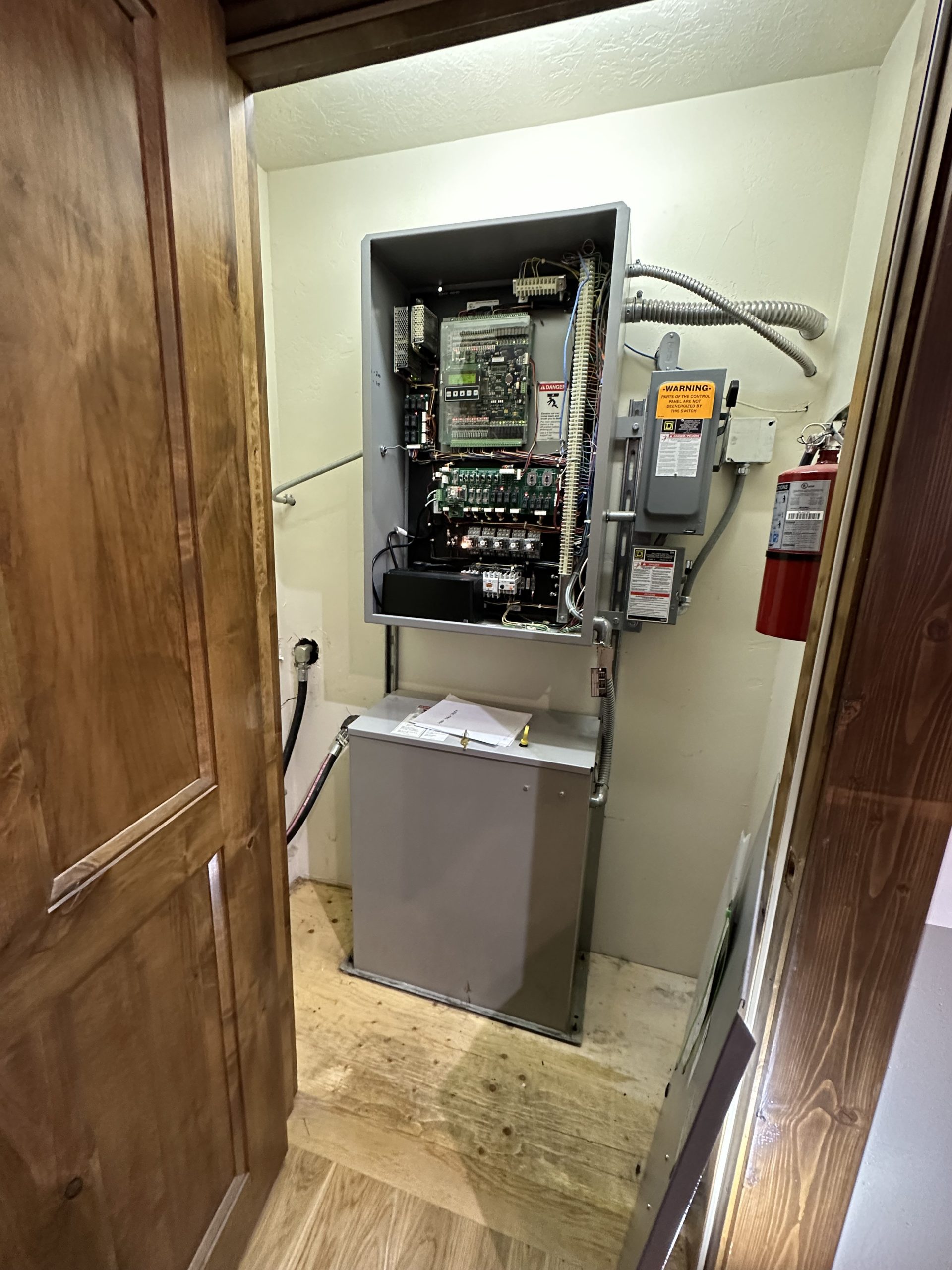
Home elevators are complex mechanical systems with high-voltage electrical components, hydraulic pressure, or vacuum systems (depending on your model). Never attempt to open the hoistway, access the pit, work on the control panel, or force doors. The troubleshooting steps below are limited to things any homeowner can safely check from inside the cab or at the breaker panel.
If anything feels off — unusual smells, smoke, water pooling, grinding sounds, or a stuck passenger — skip the troubleshooting and call immediately.
Modern Lifts emergency service line: (239) 499-3599
The 7 Most Common Home Elevator Problems — and What to Check
1. The Elevator Won’t Move at All
This is the #1 call we get. Before assuming the worst, check these three things in order:
Is the Run/Stop switch in the “Run” position? Inside the cab, on your control panel, there’s a switch labeled Run/Stop (sometimes called an emergency stop). If a family member, cleaner, or grandchild bumped it into the Stop position, the elevator won’t move no matter how many times you press a floor button. Flip it back to Run.
Is the gate or door fully closed? Home elevators will refuse to move if any gate, accordion door, or landing door isn’t fully latched. Walk each floor and physically close every door until you hear it seat. If your elevator has an inner cab gate, open it fully and close it again — sometimes it needs a full “cycle” to register.
Has the dedicated breaker tripped? Residential elevators typically run on a dedicated 220V circuit with a clearly labeled breaker in your main electrical panel. Check if it’s tripped (sitting in the middle position rather than fully “On”). Flip it fully off, wait 10 seconds, then flip it back on. If it trips again immediately, stop — that’s an electrical fault and needs a technician.
If none of those solves it, you’ve done your due diligence. Call us.
2. The Elevator Has Power but Ignores the Call Buttons
This usually comes down to one of two culprits:
- A door or gate that looks closed but isn’t fully seated. Door interlocks are extremely sensitive by design. Walk each floor again and firmly close every door.
- A stuck call button. Press and hold a floor button for 10 seconds. If the display registers the call but nothing happens, the controller may need a reset.
To perform a safe controller reset: flip the dedicated elevator breaker off, wait 30 seconds, flip it back on. If the elevator still won’t respond, don’t keep cycling the breaker — that can cause additional problems. Call for service.
3. The Doors Won’t Open or Close Properly
Door issues are the single most common repair category for residential elevators, and for good reason — the door operator has more moving parts than almost any other component on the system.
What you can check:
- Clear the door tracks of debris, dust, pet hair, or small objects
- Make sure nothing is leaning against the landing door from outside
- Check that the door sensor (usually a thin electronic strip on the door edge) isn’t covered in dust or obstructed
What requires a technician:
- Doors that close partially and reopen repeatedly
- Doors that slam shut or drag open
- Misaligned doors (visibly crooked or scraping the frame)
- Any grinding, buzzing, or clicking from the door operator
4. The Elevator Is Making Unusual Noises
A properly maintained home elevator should operate quietly. If you’re hearing something new, pay attention to when the noise happens:
- Grinding or squeaking during travel: Often indicates lubrication issues or worn guide shoes — service-call territory, not an emergency, but don’t ignore it.
- Clicking or buzzing from the control panel: Could be a failing relay or contactor. Call for service.
- Thumping or rattling when the car starts or stops: Possible issues with the drive system, brake, or suspension components. Stop using the elevator and call immediately.
Noises that used to be there and are now louder usually mean whatever was wearing down is closer to failing. Earlier service calls are cheaper service calls.
5. The Elevator Is Stopping Between Floors or Not Leveling Correctly
If the cab stops a few inches above or below the landing — or stops entirely between floors — this is not a DIY fix. Leveling issues typically indicate:
- Worn or stretched cables (on traction systems)
- Hydraulic fluid loss or contamination
- Control board or encoder issues
- Brake adjustment problems
Stop using the elevator and call a technician. Continuing to operate a system with leveling problems risks trip hazards for passengers and accelerates wear on other components.
6. The Emergency Phone or Alarm Isn’t Working
Test your elevator’s emergency phone and alarm button at least once a month. If either one fails, schedule service immediately — even if the elevator itself is running fine. A working emergency communication system is the single most important safety feature on your elevator, especially if elderly family members or grandchildren use it.
Many SWFL customers we serve have emergency phones that haven’t been tested since installation. In a real entrapment, that’s not when you want to find out the line is dead.
7. The Battery Backup Isn’t Engaging During Power Outages
Most residential elevators installed in the last 15 years include a battery backup that allows the cab to descend safely to the nearest floor if power is lost. These batteries have a lifespan — typically 3 to 5 years — and they fail silently. You won’t know yours is dead until you need it.
If you’ve been in your home for more than five years and have never had the battery backup replaced, it’s almost certainly time. We include backup battery testing and replacement in our standard maintenance visits.
Problems Specific to Southwest Florida Homes
This is where generic elevator troubleshooting guides — the ones written in Michigan or Texas — fail SWFL homeowners. Our climate creates problems most elevator content doesn’t address.
Salt Air and Humidity Corrosion
If your home is anywhere near the water — Fort Myers Beach, Sanibel, Captiva, Marco Island, Bonita Beach, or the waterfront communities along the Caloosahatchee — salt air is constantly attacking your elevator’s electrical contacts, door hardware, and mechanical components. Even inland homes in Cape Coral and Naples see accelerated corrosion compared to non-coastal markets.
Symptoms we see regularly in SWFL homes:
- Intermittent button failures (corroded contacts behind the panel)
- Door hardware that seizes or binds
- Corroded relay contacts causing random stops
- Rusted pit components in homes with flood history
SWFL elevators need more frequent service than the manufacturer’s default schedule. A twice-yearly maintenance plan is the baseline we recommend for homes within 5 miles of open water.
Post-Hurricane and Storm Issues
After Ian, Helene, Milton, and every named storm before them, we get a surge of service calls that all fall into predictable categories:
- Pit flooding. Storm surge or heavy rain infiltrates the hoistway. Even a small amount of standing water in the pit will disable the elevator via its float switch (a safety feature, not a malfunction). The water needs to be professionally removed, and the pit components inspected for damage before the system is returned to service.
- Power surge damage. Lightning or utility power fluctuations during and after storms routinely fry control boards, even in homes with surge protection.
- Battery backup drain. If the power was out for several days, your backup battery may be deeply discharged and need replacement.
- Moisture in the machine room. Wind-driven rain through roof vents or openings can cause slow-developing issues that show up weeks after the storm.
After any major weather event, do not use your elevator until a qualified technician has inspected it — even if it appears to be working. We offer post-storm inspections specifically for this reason. Schedule a post-storm inspection →
Snowbird and Seasonal Home Issues
A huge portion of SWFL homes sit empty for months during summer. Elevators left unused for extended periods develop their own set of issues:
- Hydraulic fluid settling and seal degradation
- Battery backup drain
- Pest infestation in machine rooms and pits
- Belt and cable relaxation
If your home is seasonal, we strongly recommend a “return service” visit scheduled a week before you arrive back in Florida — so you step into a home where everything works, instead of discovering problems on day one.
When to Call a Professional (Don’t Wait)
Call for service immediately — don’t continue using the elevator — if you experience any of the following:
- A passenger is trapped (always call 911 first if it’s a medical emergency, then call us)
- Water in the pit, machine room, or shaft
- Burning smells, smoke, or any visible electrical issue
- The cab stops between floors
- Doors that open while the car is moving (extremely rare but serious)
- Unusual grinding, scraping, or thumping during travel
- Leveling errors greater than 1/2 inch
- Any fault code on the display you don’t recognize
- The elevator worked yesterday and is completely dead today with no obvious cause
For non-emergency service — regular maintenance, modernization questions, or minor issues that aren’t affecting safety — call during business hours and we’ll schedule a visit that works for your calendar.
Why Preventive Maintenance Matters (Especially in SWFL)
Here’s the honest truth from someone who does this every day: most expensive residential elevator repairs are preventable. The customers who call us in a panic with a $3,000+ repair bill are almost always homeowners who haven’t had the system serviced in 3, 5, or sometimes 10 years.
The customers who are on a maintenance plan? They call us for small adjustments, occasional part replacements, and peace-of-mind checks. Their elevators last longer, operate more safely, and cost far less over the life of the system.
A Modern Lifts maintenance plan includes:
- Scheduled biannual inspections (quarterly available for high-use homes)
- Lubrication of all moving components
- Safety system testing (emergency phone, alarm, battery backup, door interlocks)
- Cleaning of critical contacts and sensors
- Full operational check and fault code review
- Priority scheduling for any service calls between visits
- Discounted labor rates for non-covered repairs
If you’re in Fort Myers, Cape Coral, Estero, Bonita Springs, Naples, Marco Island, or anywhere in between, schedule a free maintenance consultation → and we’ll give you an honest assessment of your current system.
Frequently Asked Questions
How much does home elevator repair cost in Southwest Florida?
Most service calls fall between $250 and $850 depending on the issue. Simple fixes like sensor alignment, door adjustments, or relay replacements are on the low end. Control board replacements, cable work, or hydraulic system repairs are higher. Modern Lifts provides a clear estimate before any work begins — no surprise billing.
Should I repair my old elevator or modernize it?
If your elevator is more than 15 years old and you’re starting to see more frequent service calls, modernization is often the smarter long-term investment. We replace outdated controls, upgrade safety features, and update interior finishes — giving you essentially a new elevator at a fraction of replacement cost. Learn more about modernization →
How often should I have my home elevator serviced?
Manufacturers typically recommend annual service. In Southwest Florida, we recommend twice-yearly service minimum for homes within 5 miles of the coast, and quarterly for high-use homes or homes with elderly residents who rely on the elevator daily.
Do you service all brands of home elevators?
Yes. We service all major residential elevator brands installed in SWFL homes, including Savaria, Waupaca, Residential Elevators Inc., Cambridge, Inclinator, Stiltz, and older Access and Otis residential models. If you’re not sure what brand you have, send us a photo of the control panel and we can identify it.
My elevator hasn’t been serviced in years. Is it dangerous to use?
Possibly. An elevator can appear to work normally while developing internal issues — worn cables, degraded seals, failing safety systems — that aren’t visible to a homeowner. If your elevator hasn’t been professionally serviced in 3+ years, we’d strongly recommend an inspection before continued use, especially if elderly family members rely on it.
Do you offer emergency service?
Yes. Modern Lifts provides emergency service throughout our SWFL service area for active entrapments, safety concerns, and total system failures. Call (239) 499-3599 and you’ll reach our team directly.
Let’s Get Your Elevator Running Right
At Modern Lifts, LLC, we’re a local Fort Myers company — not a national chain dispatching from three states away. We know SWFL homes, we understand what hurricanes, salt air, and summer humidity do to residential elevators, and we treat every service call like we’re working on a family member’s home.
If your elevator is acting up, give us a call. If everything’s working fine but you haven’t had it looked at in a while, let’s schedule a maintenance visit before small issues become expensive ones.
📞 (239) 499-3599 📍 Serving Cape Coral, Fort Myers, Fort Myers Beach, Sanibel, Captiva, Estero, Bonita Springs, Naples, and Marco Island
Schedule a Free Consultation →
Modern Lifts, LLC is a licensed and insured residential elevator company based in Fort Myers, Florida. We specialize in the installation, modernization, service, and repair of home elevators throughout Southwest Florida.